01302 246818

What Is Robotic Automation and Which Type Is Best?

Robotic automation is no longer limited to large factories with fenced-off machines. Today, it can include industrial robots, collaborative robots, autonomous mobile robots, and software-based process automation. Each type solves a different operational problem. Choosing well requires more than comparing speed, price, or technical specifications.

Marina Bill, President of the International Federation of Robotics, has said, “Robots are becoming an increasingly important part of our lives.” Her observation reflects what many businesses now experience. A robotic arm may place parts into a tray every few seconds. A mobile robot may carry materials across a warehouse. A software robot may transfer invoice data between systems. The visible results differ, but the goal remains consistent: safer, steadier, and more measurable work.

This guide examines what robotic automation means and how its main forms differ. It considers production volume, task repetition, workplace safety, integration needs, and employee involvement. Industrial robots may suit high-volume manufacturing, while cobots often fit smaller teams seeking flexible deployment. Robotic automation solutions can also combine physical machines with artificial intelligence and business software. That combination sounds powerful. Sometimes, it adds unnecessary complexity.

The best choice is rarely the newest machine. It is the solution that fits the process, people, budget, and maintenance capacity. Poorly defined tasks can create expensive automation with disappointing results. That is an uncomfortable truth. Businesses should test assumptions, measure outcomes, and accept that some processes are not ready for automation. This practical perspective helps decision-makers compare options responsibly and build a more reliable automation strategy.
What Is Robotic Automation and Which Type Is Best?

What Is Robotic Automation?

Robotic automation is the use of programmed machines or software agents to perform repeatable tasks with limited human intervention. It may involve a physical robot moving parts, or a digital robot entering data into business systems. The central idea is simple: instructions turn routine actions into consistent workflows. It is not magic.

In a typical operation, a software robot can read an approved invoice, check required fields, and record the details in a database. A physical robot may sort packages, tighten components, or inspect surfaces with cameras. These systems work best when rules are clear, inputs are stable, and exceptions are limited. Audit logs, access controls, testing, and human approval help protect accuracy and accountability. Small failures matter. A missing field can interrupt an entire process.

Choosing the best type depends on the work, not the newest technology. Digital automation suits screen-based tasks with structured information. Physical automation fits repetitive movements, controlled environments, and measurable safety conditions. A careful assessment should examine task frequency, error costs, maintenance needs, and worker involvement. I would not automate a process that changes daily or lacks reliable instructions. That decision may feel slower, but rushed automation often creates hidden rework. Human review remains valuable when judgment, empathy, or unusual circumstances affect the outcome.

How Robotic Automation Works

Robotic automation combines machines, software, sensors, and programmed decisions to complete repeatable work. It can move parts, inspect surfaces, sort packages, or transfer information between systems. The best type depends on the task, workspace, risk level, and required flexibility.

How robotic automation works begins with sensing. Cameras, proximity sensors, or force detectors collect information from the environment. A controller then compares that information with programmed instructions. It calculates a response and sends commands to motors, grippers, or digital workflows. The machine acts, measures the result, and adjusts when feedback shows a difference.

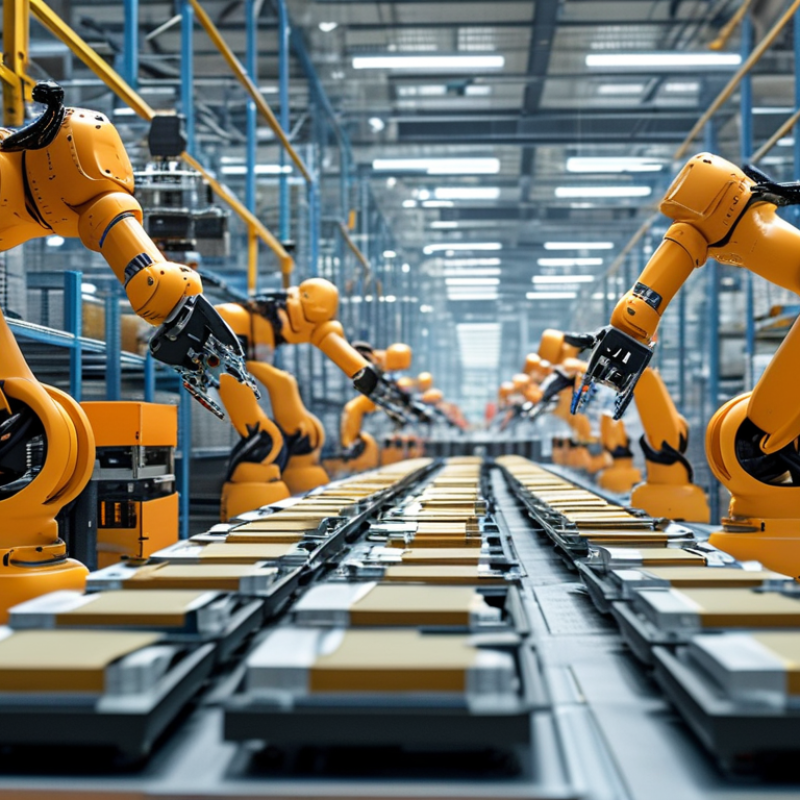
For example, a robotic arm may identify a metal component on a moving belt. Its vision system estimates the component’s position. The controller calculates the arm’s movement, while a gripper applies controlled pressure. If the part shifts, feedback can correct the motion. Physical robots suit handling and assembly, while software automation suits structured computer tasks. Hybrid systems connect both.

Good automation requires careful testing, maintenance, and human supervision. Sensors can become dusty. Lighting can change. A process that works in a laboratory may fail beside a busy production line. I have found that small exceptions often reveal larger design weaknesses. A reliable system records errors, allows safe intervention, and gives workers clear control when conditions fall outside its training.

The Main Types of Robotic Automation

What Is Robotic Automation and Which Type Is Best?

The main types of robotic automation are fixed, programmable, flexible, and collaborative systems. Fixed automation suits stable production, such as repeated welding or packaging. It offers speed, but changing the workflow can become expensive. Programmable automation handles different batches through software and tooling changes. This option fits manufacturers with regular product variation. Flexible automation uses sensors, vision, and adaptive controls for unpredictable tasks. It can manage mixed parts on one line. However, flexibility increases integration effort and maintenance demands. A pilot often looks cleaner than production.

Collaborative automation works near people and supports lifting, inspection, or precise assembly. It may improve ergonomics, but it does not remove every safety requirement. Risk assessments remain essential. The International Federation of Robotics reported 541,302 industrial robots were installed worldwide in 2023, with Asia receiving about 70% of new installations. Its World Robotics 2024 report also recorded more than 4.2 million robots operating globally. These figures show broad adoption, not automatic success. A fixed system is often best for high volume and stable designs. A programmable or flexible system may suit shorter runs. Collaborative equipment fits tasks where human judgment still matters. The wrong choice can create idle machines, confusing interfaces, and unexpected downtime. That matters. Technician feedback should guide the final decision, not only return-on-investment estimates.

Comparing Robotic Automation Types

What Is Robotic Automation and Which Type Is Best?

Comparing Robotic Automation Types

Robotic automation is not one universal machine. Its best form depends on production volume, product variety, safety needs, and available floor space. Fixed automation suits stable, high-volume work. A dedicated robot can move parts between stations all day. It is fast and consistent, but expensive to change.

Programmable automation handles different batches through software instructions, tooling changes, or recipe settings. It fits factories with moderate variety and repeated production runs. Flexible automation goes further. Sensors and vision systems help robots identify changing parts, adjust movement, and support shorter production cycles. Collaborative systems can work near trained employees, but they still require documented risk assessments, guarded areas when needed, and regular maintenance. More flexibility also means more setup complexity. That trade-off is easy to underestimate.

Tips: Map the task before choosing equipment. Record cycle time, payload, reach, error rates, and changeover frequency. Test the hardest part, not the easiest sample. A small pilot may expose poor lighting, unstable parts, or awkward operator access. Keep manual fallback procedures available. No type wins every time. A cheaper system may create higher maintenance costs later, while an advanced system may offer features your process never uses. Review safety guidance, supplier documentation, and measured pilot results before approving a full installation.

What Is Robotic Automation and Which Type Is Best? - Comparing Robotic Automation Types

Automation Type What It Automates Operating Environment Typical Inputs Human Involvement Implementation Complexity Main Advantages Common Limitations Best Fit
Rule-Based Robotic Process Automation (RPA) Repetitive, rule-driven tasks such as data entry, file transfers, form completion, and application-to-application copying. Primarily digital workplaces using desktop applications, websites, spreadsheets, and structured business systems. Structured data, predefined fields, fixed procedures, and stable user interfaces. Low during execution; people define rules, handle exceptions, and monitor results. Low to Medium Fast deployment, consistent execution, reduced manual keystrokes, and useful operation across systems without direct integration. Less suitable for changing interfaces, unstructured information, ambiguous decisions, and processes requiring judgment. High-volume administrative workflows with clear rules and predictable outcomes.
Cognitive Automation Tasks involving document understanding, classification, extraction, language processing, and recommendations. Digital environments connected to document repositories, communication tools, and business applications. Text, emails, invoices, images, scanned documents, and other semi-structured or unstructured content. Medium; people usually validate uncertain results and manage sensitive decisions. Medium to High Processes information that traditional rule-based automation cannot easily interpret and supports more flexible workflows. Accuracy depends on data quality, model performance, context, and appropriate human oversight. Document-heavy processes such as claims review, invoice handling, service requests, and email triage.
Physical Robotic Automation Physical actions such as picking, moving, assembling, sorting, packaging, inspection, and machine tending. Factories, warehouses, laboratories, hospitals, and other physical workspaces. Sensors, cameras, machine signals, location data, and programmed movement instructions. Medium; people configure, maintain, supervise, and collaborate with the equipment. Medium to High High repeatability, continuous operation, improved ergonomics, and consistent physical handling. Requires equipment, workspace design, safety controls, maintenance, and appropriate physical conditions. Repetitive or hazardous physical tasks in controlled and structured environments.
Collaborative Robotics Physical tasks performed in cooperation with people, including assembly assistance, inspection, material handling, and tool use. Shared work areas where people and robots operate near one another under defined safety conditions. Sensor feedback, programmed task sequences, machine vision, and operator input. High during setup and often present during operation, depending on the task and risk assessment. Medium Flexible deployment, support for human workers, and suitability for smaller production runs or changing tasks. Speed, payload, reach, and safety requirements can limit the range of suitable applications. Human-centered production and handling tasks that benefit from assistance rather than full replacement.
Intelligent Process Automation (IPA) End-to-end processes combining workflow automation, rules, software robots, analytics, and artificial intelligence. Cross-functional digital operations spanning multiple applications, teams, and decision points. Structured and unstructured data, business rules, historical records, and real-time process events. Medium to High; people govern decisions, exceptions, compliance, and continuous improvement. High Coordinates multiple automation technologies and can improve complete processes rather than isolated tasks. Needs strong process governance, data controls, system integration, monitoring, and change management. Complex business processes that require orchestration, interpretation, and multiple technology components.
Autonomous Mobile Robotics Navigation, transport, delivery, inventory movement, and route-based handling without fixed travel paths. Warehouses, hospitals, campuses, fulfillment areas, and other mapped indoor or outdoor environments. Lidar, cameras, location systems, maps, proximity sensors, and task-management software. Low to Medium during normal operation; people intervene for exceptions, safety, and maintenance. Medium to High Flexible movement, reduced manual transport, and the ability to adapt routes to changing conditions. Performance depends on navigation accuracy, floor conditions, traffic, connectivity, and site readiness. Repeated material or item transport across environments where fixed conveyors are impractical.

Selection principle: The best type depends on the work being automated. Use rule-based RPA for stable digital tasks, cognitive automation for information-heavy work, physical or collaborative robotics for hands-on activities, and intelligent process automation for complex workflows that combine several automation methods.

How to Choose the Best Type for Your Needs

What Is Robotic Automation and Which Type Is Best?

How to Choose the Best Type for Your Needs

Robotic automation uses machines or software to perform repeatable tasks with limited human input. The best choice depends on your workflow, not the newest technology. Begin by observing the task on a normal working day. Measure handling time, error rates, safety risks, and decision points. Measure the work.

Software automation suits rule-based digital tasks, such as transferring data between systems or checking standard forms. Physical robots fit repetitive movement, loading, inspection, or packaging. Mobile robots may help when materials travel across changing routes. Choose fixed equipment when the process rarely changes. Choose flexible equipment when product sizes or locations vary.

Consider your staff, floor space, maintenance skills, and integration needs. A small pilot often reveals hidden problems, including poor data, awkward tool access, or inconsistent product quality. It sounds simple. It rarely is. Teams sometimes automate a weak process and make its mistakes faster. Review the process before buying equipment, and define measurable results for the pilot. Keep humans involved where judgment, unusual defects, or customer-specific decisions matter. A system that saves hours but creates daily supervision may not be the best fit. Recheck the decision after real operating data arrives, because early assumptions can be wrong.

What Is Robotic Automation and Which Type Is Best?

Relative fit scores show how well each automation type typically matches common business requirements. Higher scores indicate a stronger typical fit; the best choice depends on the task, environment, integration needs, and safety requirements.

Rule-based software tasks usually suit RPA. High-speed, repetitive production tasks generally suit industrial robots. Collaborative robots are designed for selected applications where people and robots work near one another, while autonomous mobile robots are commonly used for flexible material movement across facilities.