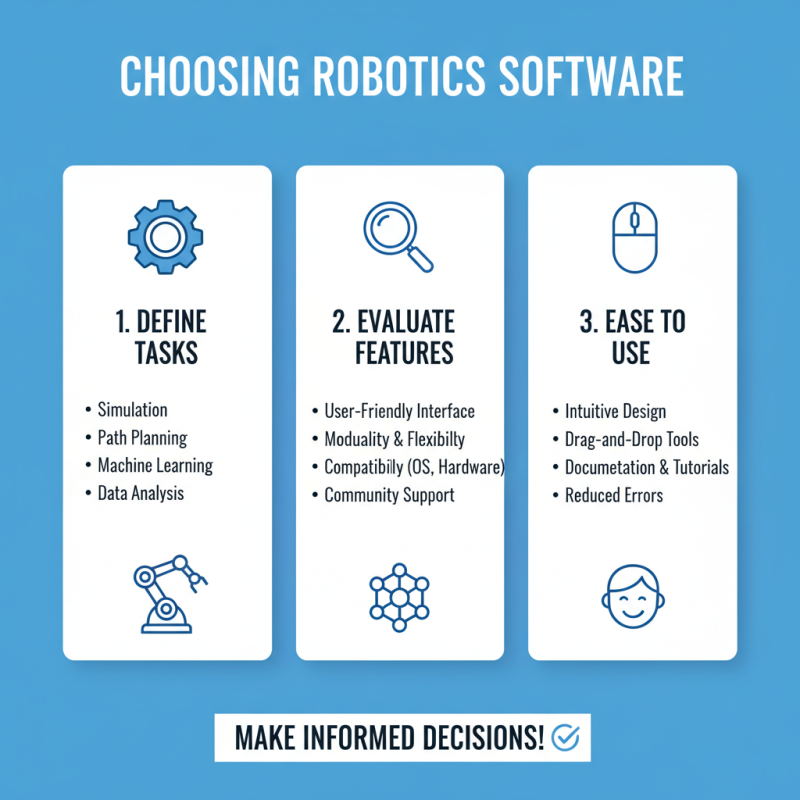
10 Essential Tips for Choosing the Best Robotics Software
The robotics software market is rapidly evolving. According to a recent report from MarketsandMarkets, it is projected to reach $100 billion by 2025. This growth highlights the increasing importance of effective robotics software in various industries.
Choosing the right robotics software is crucial for achieving operational efficiency and innovation. A wrong choice can lead to costly delays and inefficiencies. Many organizations still struggle with software that does not meet their specific needs. Clear understanding of your requirements is vital in this selection process.
Investing in robotics software should be a thoughtful decision. Consider factors like integration capabilities, user-friendliness, and support services. A well-chosen software system not only enhances productivity but also adds value to your operations. As you navigate through options, be mindful of your long-term goals and adaptability.
Understanding Your Robotics Needs and Goals
When choosing robotics software, understanding your specific needs and goals is crucial. Investing in software requires a deep dive into the tasks you want to automate. According to a report from the International Federation of Robotics, 70% of companies fail to align their software choices with their operational goals. This misalignment often leads to wasted resources and ineffective solutions.
Consider your industry. Different sectors may have distinct requirements. For instance, manufacturing often emphasizes precision and efficiency. Meanwhile, service robots focus on user interaction and adaptability. A survey by McKinsey shows that nearly 34% of companies rethink their software strategies as their needs evolve. Regular reassessment is vital, as software should grow with your business.
Do not overlook possible limitations. Some software may seem user-friendly but lacks scalability. A Gartner study indicates that 40% of robotics projects do not meet their initial objectives due to scalability issues. Reflect on how your goals may change over time. Choosing software that addresses current and future needs can mitigate risks associated with investment.
Evaluating Software Features and Capabilities
Choosing the right robotics software can be daunting. Evaluating software features is crucial. Start by considering what tasks you need the software to perform. Does it support simulation, path planning, or machine learning? Look for user-friendly interfaces. A complicated interface may lead to frustration and errors. Simplified access to tools can enhance productivity.
Compatibility with existing systems is another key factor. Ensure the software can easily integrate with your hardware. Check if it supports commonly used programming languages and protocols. Pay attention to customization options. Some users need specialized functions while others may prefer a more standardized approach. Balance flexibility with ease of use. Testing different software on trial periods can uncover limitations early on. Some may seem perfect until you encounter a critical issue that halts your project.
Documentation and community support are often overlooked. Quality documentation can save hours of troubleshooting. Engaging with a supportive community enhances the learning experience. Seek forums, tutorials, and user feedback. This can provide insights that official support might not cover. Remember, the best choice may require some trial and error. Reflect on what features truly align with your needs.
Assessing Compatibility with Existing Hardware
Choosing robotics software requires careful consideration of compatibility with existing hardware. In a recent industry report, nearly 65% of organizations face integration issues when deploying new software. This highlights the importance of assessing how the software will work with current systems.
Testing compatibility is crucial. Performance may vary significantly across different hardware setups. For instance, incompatible software can lead to lag or failure in execution. In some cases, organizations reported downtime rates of up to 30% due to mismatched systems. Minor adjustments in interfaces can make a big difference. Ensuring that the robotics software supports existing hardware specifications is essential for smooth operations.
Documentation and support quality often get overlooked. Without clear guidance, implementation can become challenging. Many users find themselves stuck with features they cannot utilize. The right software should not only enhance productivity but also adapt seamlessly to your hardware. A proactive approach in evaluating these factors can save substantial time and resources down the line.
Compatibility Assessment of Robotics Software with Existing Hardware
Considering User Support and Community Resources
When selecting robotics software, user support and community resources should be a top priority. Research shows that effective user support can significantly increase user satisfaction. According to a recent industry report, 75% of users prioritize responsive customer service while choosing software. Good support can help resolve issues quickly. It is essential for both novices and experts.
A strong community can also enhance the user experience. Many successful robotics projects rely on forums, online groups, and tutorials. Studies indicate that 60% of users find community contributions valuable. Engaging with a community can provide insights that official documentation often lacks. However, not all communities are equally supportive. Some may have toxic environments, making it challenging for newcomers to ask questions. Evaluating community dynamics is crucial.
Support resources like webinars and troubleshooting guides are also key components. These tools can empower users to solve problems independently. Yet, not all software providers offer comprehensive resources. This inconsistency can result in frustration, especially for complex robotics tasks. Users might find themselves stuck, which could lead to wasted time and resources. It's vital to ensure that both user support and community resources align with your needs before committing to a software choice.
Analyzing Cost and Licensing Options
When selecting robotics software, understanding
cost and licensing options is crucial.
Software can range from free to very expensive.
Free options may lack features and support. However, they can be great for
small projects. Evaluate what you need versus what you can afford.
If it’s a tight budget, open-source software might be a tempting choice.
Some of these solutions are robust but require a learning curve.
Licensing can also be tricky. Subscription models offer flexibility but can add up
over time. One-time purchases seem appealing but may be costly upfront. Assess how often
you’ll need updates. Some software includes them in the price; others don’t. It’s worth reading the
fine print.
Make sure to consider how many users will access the software. Some
licenses charge per user, which can escalate costs quickly.
Think about the intended scale of your project.
Planning for future needs can save you money down the line.
Don’t rush into a decision. Take the time to compare your options.
A hasty choice can lead to higher expenses later.