Why Cobot Robots Are Revolutionizing the Future of Automation?
Cobot robots are transforming industries and redefining how automation works. According to Dr. Emily Carter, a leading expert in robotics, “Cobot robots are not just tools; they are partners in production.” This insight highlights the collaborative nature of cobots, which work alongside human operators.
These robots are designed to assist, not replace, human labor. They excel in tasks that require precision and consistency. Industries are adopting cobots in assembly lines and logistics. However, the integration of cobots poses challenges. Workers may feel threatened by these machines. Companies must address these concerns to ensure a harmonious workplace.
Cobot robots can significantly boost productivity. Yet, organizations need to invest in training and support. This investment is crucial for maximizing their potential. As we stride into a more automated future, understanding the role of cobots is essential. Will they truly revolutionize our work environment? Only time will tell.
The Definition and Evolution of Cobot Robots in Automation
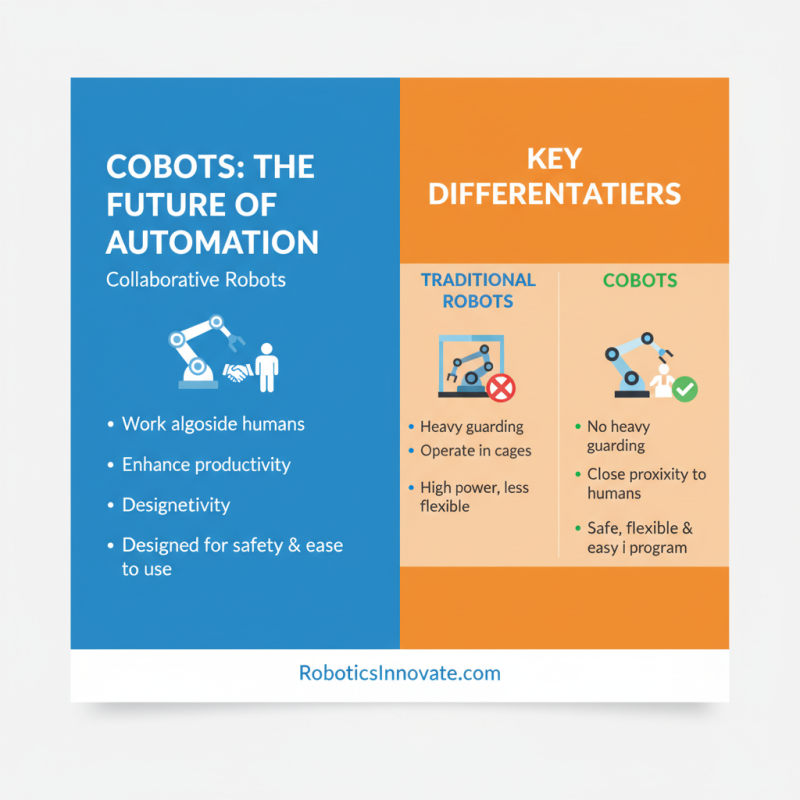
Cobot robots, or collaborative robots, have transformed automation significantly. They work alongside humans, enhancing productivity. Unlike traditional robots, cobots are designed for safety and ease of use. They often lack the heavy guarding found in industrial robots, allowing them to operate in close proximity to human workers.
The evolution of cobot technology is impressive. According to a report by the International Federation of Robotics, the global market for collaborative robots will reach $12 billion by 2025. This growth highlights the increasing importance of automation in various sectors. Cobot applications range from manufacturing to healthcare. Yet, while cobots are advanced, challenges remain. Workers must adapt to new processes. Sometimes, cobots require significant programming knowledge.
Moreover, safety remains a concern. Although they are built for collaboration, accidents can occur. Companies need robust training programs. They should also ensure proper maintenance of these robots. The integration of cobots could be smoother, but with ongoing development, the potential is enormous. The future of work may very well depend on how well we can adapt to this new reality.
Key Industries Transforming with Cobot Integration and Applications
Cobot robots, or collaborative robots, are transforming various industries with their unique capabilities. They can work alongside humans, enhancing productivity without the need for safety cages. In manufacturing, cobots assist with repetitive tasks like assembly, welding, and packaging. Their flexibility allows companies to switch between tasks quickly. This adaptability is critical in high-demand environments where speed and efficiency are essential.
Healthcare is another industry experiencing a shift. Cobots are used for managing medications and performing precision tasks in surgeries. They can help with patient monitoring, allowing medical staff to focus on care. This integration improves accuracy and reduces human error. However, there are challenges. Training employees to work with cobots requires time and effort. Not all workers are comfortable with the change, leading to some resistance. Addressing these concerns is vital for successful integration.
The logistics sector is also reaping benefits. Cobots handle sorting and packaging in warehouses, optimizing workflows. They reduce labor costs but may lead to job shifts. Some workers might fear job displacement as cobots take over certain roles. Balancing automation with human roles is crucial for harmony in the workplace.
Comparative Analysis: Cobots vs. Traditional Industrial Robots
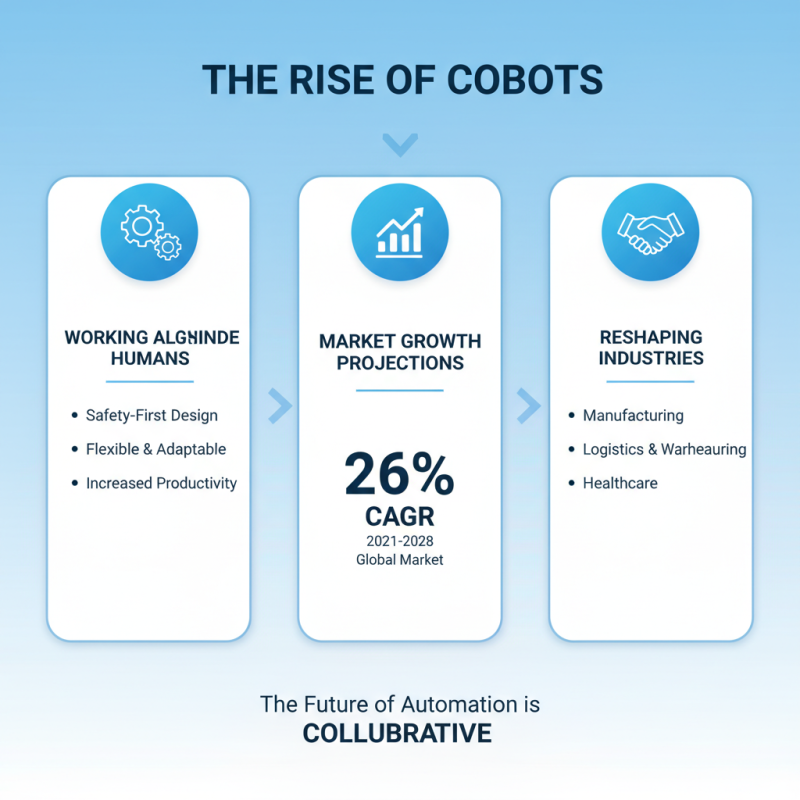
Cobots, or collaborative robots, are reshaping industries by working alongside humans. Unlike traditional industrial robots, which often operate in isolation, cobots are designed for safety and flexibility. According to a recent report, the global cobot market is projected to grow at a compound annual growth rate (CAGR) of 26% from 2021 to 2028. This surge indicates strong market confidence in cobot technology.
Traditional robots often require extensive safety measures and protective barriers. They are costly and time-consuming to program and reconfigure. Contrastingly, cobots are user-friendly and can easily adapt to different tasks. For instance, they assist human workers in assembling products, achieving up to 85% efficiency in repetitive tasks. Their lightweight design allows them to be moved seamlessly across various workstations. However, companies might struggle with integration as cobots require a shift in workplace culture.
Despite their advantages, cobots are not infallible. They may lack the power and precision of heavy-duty industrial robots. In certain applications, this could hinder production speed or quality. Financially, cobots represent a smaller initial investment, but their long-term reliability remains a question. Only time will reveal if they can consistently outperform traditional robots in high-demand environments.
Quantitative Impact: Cobots and Productivity in Manufacturing Sectors
Cobots, or collaborative robots, are making a significant impact on manufacturing productivity. According to a recent industry report, cobots can improve labor productivity by up to 35%. These robots work alongside human workers, assisting in tasks that are repetitive and physically demanding. They reduce the risk of injury and fatigue among employees. This dual capability greatly enhances overall efficiency in production lines.
In the automotive sector, for instance, the integration of cobots has led to faster assembly times. A study found that companies adopting cobots reported a 20% increase in output. However, companies must also consider the initial investment costs. While cobots offer many benefits, the return on investment may vary. It is essential to evaluate specific needs and operational workflows. Striking a balance between human skill and robotic assistance is crucial for maximizing productivity.
Impact of Cobots on Manufacturing Productivity
The Future of Cobot Technology: Trends and Predictions for 2030
Cobot technology is rapidly evolving. By 2030, we can expect significant advancements that enhance collaboration between humans and robots. These machines will be more intuitive, able to adapt to various tasks with ease. Imagine a factory floor where cobots seamlessly adjust their functions based on real-time input from human workers. This level of flexibility has the potential to improve productivity and safety.
As the technology grows, challenges will also arise. Ethical concerns about job displacement are a real issue. Workers may feel threatened by the capabilities of these machines. It’s essential to find a balance between efficiency and human employment. Training programs will be crucial to help the workforce adapt and thrive alongside cobots.
Additionally, integration of artificial intelligence will drive innovation. Cobots will not just follow commands; they will learn and make decisions. Yet, we must also consider the reliability of these systems. What happens if a cobot misinterprets a task? Collaboration will need to be clear and effective. The future of automation is bright, but it requires careful consideration of human roles and technological limitations.